Whisper for Long-Form Transcription: Best Practices & Complete Guide (2026)

Eric King
Author
OpenAI Whisper is widely known for its accuracy in speech recognition, but many users struggle when applying it to long-form transcription such as podcasts, lectures, meetings, and interviews that last hours.
This guide explains how to use Whisper effectively for long audio files, covering segmentation strategies, GPU optimization, and production-ready workflows.
Why Long-Form Transcription Is Challenging
Long audio introduces several technical challenges:
- GPU memory limits when processing long sequences
- Slower inference speed without batching
- Error accumulation over time
- Timestamp drift across segments
Because Whisper processes fixed-length audio windows, handling long recordings requires careful engineering.
Segmenting Long Audio (Most Important Step)
Never send multi-hour audio directly into Whisper.
Recommended Settings
- Segment length: 30–60 seconds
- Overlap: 3–10 seconds
- Format: WAV or FLAC (16kHz recommended)
Overlap ensures that words spoken at segment boundaries are not lost.
segments = split_audio(
    audio_path,
    segment_length=60,
    overlap=5
)
Choosing the Right Whisper Model
| Model | Accuracy | Speed | VRAM Usage | Recommended For |
|---|---|---|---|---|
| tiny | Low | Very fast | ~1–2 GB | Testing |
| base | Medium | Fast | ~2–4 GB | Light use |
| small | Good | Moderate | ~4–8 GB | Most users |
| medium | Very good | Slower | ~8–12 GB | Long-form |
| large | Best | Slowest | ~12–24 GB | High accuracy |
Best balance for long-form: small or medium
GPU Optimization Tips
Enable FP16 / BF16
Reduces memory usage and improves speed:
model = whisper.load_model("medium").half()
Batch Segments
Batch multiple segments together to fully utilize the GPU:
results = model.transcribe(
    segments,
    batch_size=8
)
Recommended GPUs
- RTX 4070 / 4080 → Small–Medium models
- RTX 4090 / A6000 → Medium–Large models
Handling Timestamps Correctly
Each segment has relative timestamps. To convert them into absolute timestamps:
absolute_time = segment_start_time + local_timestamp
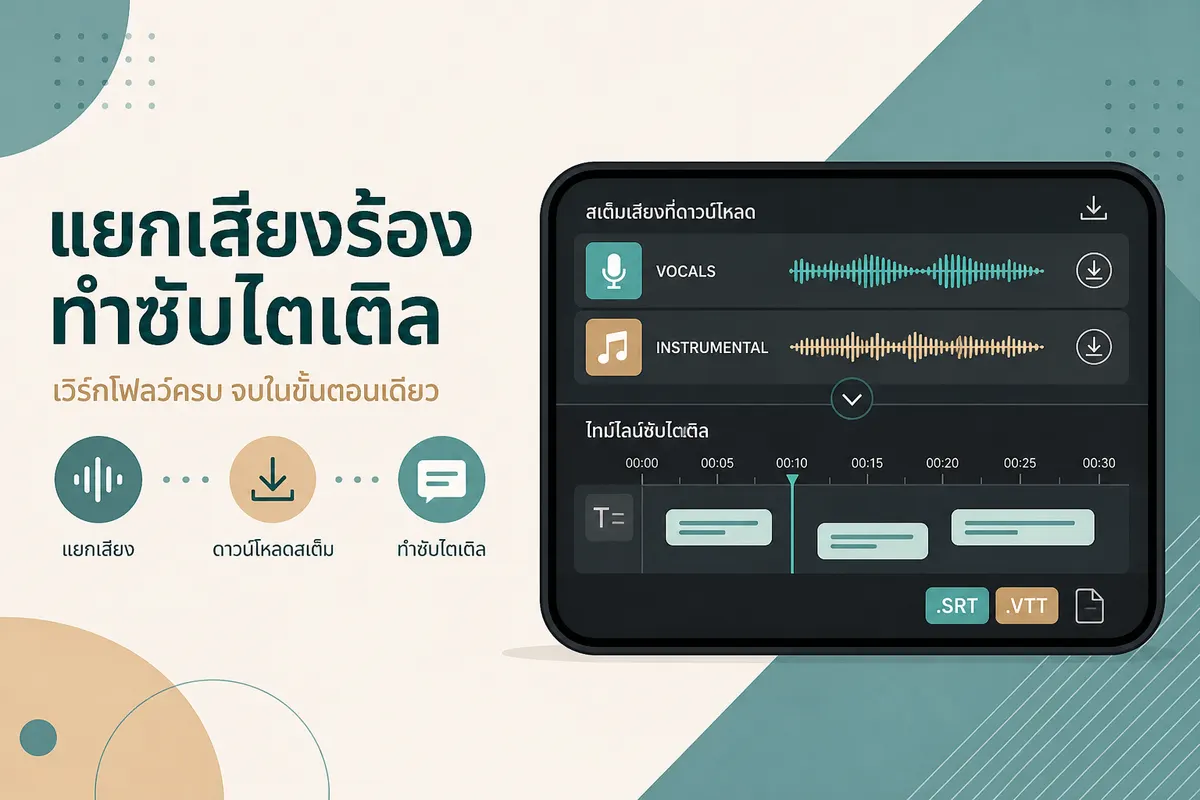
This is essential when generating SRT / VTT subtitles.
Merging Segments Cleanly
After transcription:
- Remove overlapping text
- Fix split words
- Normalize punctuation
final_text = merge_segments(
    transcripts,
    overlap=5
)
End-to-End Workflow
Audio Preprocessing
- Normalize volume
- Convert to 16kHz mono
Segmentation
- 30–60s windows with overlap
GPU Inference
- FP16 + batching
Post-processing
- Merge text
- Adjust timestamps
Export
- TXT / SRT / VTT / JSON
Common Problems & Solutions
| Problem | Solution |
|---|---|
| Out of memory | Use smaller model / FP16 |
| Missing words | Increase overlap |
| Slow processing | Increase batch size |
| Timestamp mismatch | Offset timestamps per segment |
Ideal Use Cases
- Podcast transcription
- Meeting & Zoom recordings
- Online courses & lectures
- Interviews & research audio
- YouTube long videos
Final Thoughts
Whisper is extremely powerful for long-form transcription — if used correctly.
The key is:
- Segment wisely
- Batch efficiently
- Optimize GPU usage
- Merge results carefully
With these best practices, Whisper can reliably transcribe hours of audio with high accuracy and reasonable cost, making it a strong foundation for any AI transcription pipeline.