MP3 vs WAV for Speech-to-Text: Which Audio Format Is Better for AI Transcription?

Eric King
Author
Introduction
When converting audio to text using AI, many users ask the same question:
Should I upload MP3 or WAV for the best transcription accuracy?
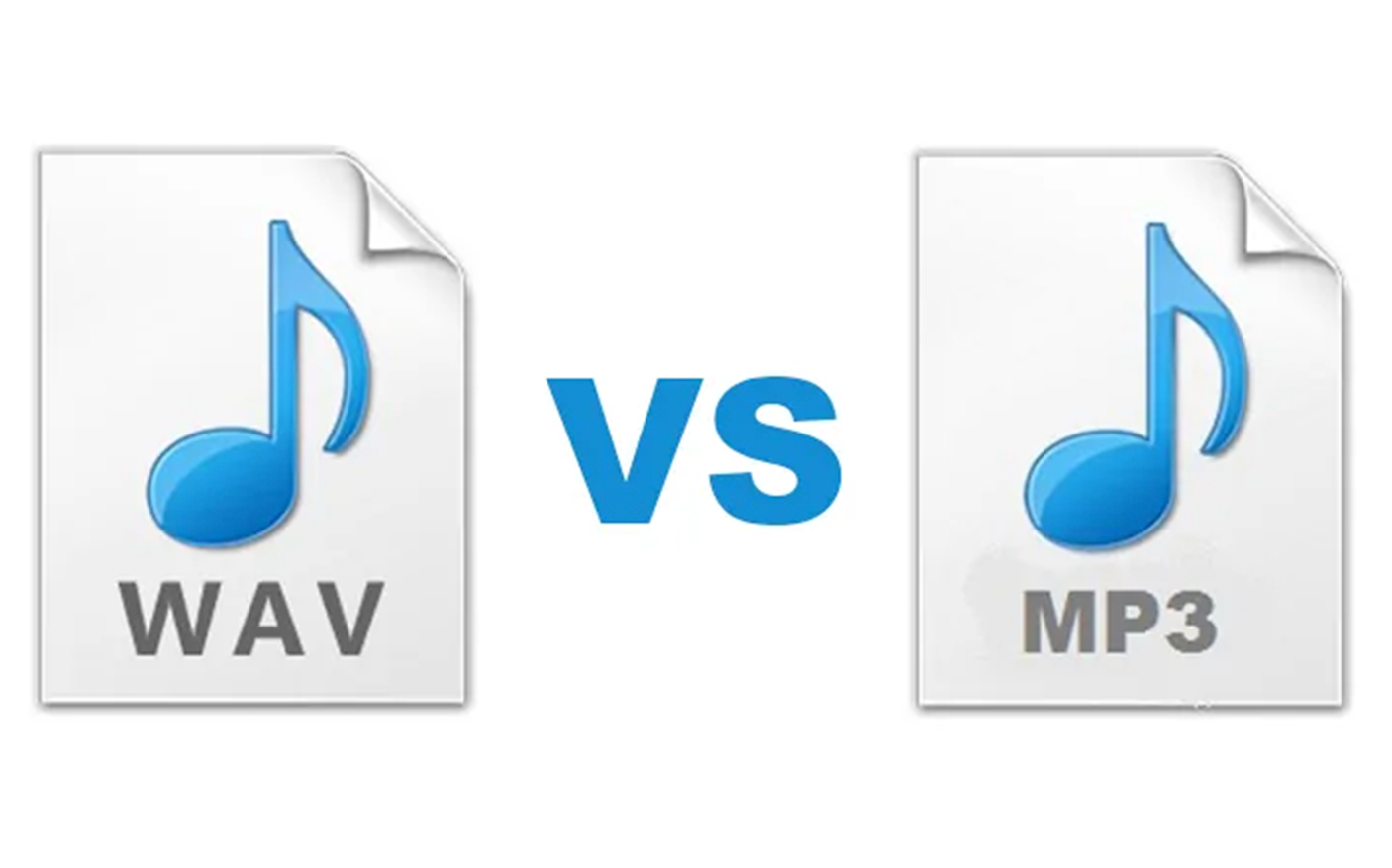
The short answer is: both work well, but each format has its own strengths depending on your use case. In this guide, we'll break down the real differences between MP3 and WAV in AI speech-to-text systems and help you choose the best option for your workflow.
What Is the Difference Between MP3 and WAV?
WAV: Uncompressed and Lossless
WAV (Waveform Audio File Format) files store raw audio data without compression. This means they preserve the full waveform exactly as it was recorded, maintaining every detail of the original audio signal.
Key characteristics:
- Lossless audio quality: No data is lost during encoding
- Larger file size: Typically 10-12 times larger than MP3
- Ideal for professional audio processing: Used in studios and professional workflows
- Preferred by AI models during training: Higher quality input data
WAV files are essentially a container for uncompressed PCM (Pulse Code Modulation) audio data, making them the gold standard for audio quality.
MP3: Compressed and Efficient
MP3 (MPEG Audio Layer III) uses lossy compression to reduce file size by removing sounds that are less noticeable to human ears using psychoacoustic principles.
Key characteristics:
- Much smaller file size: Typically 90% smaller than WAV
- Faster uploads and downloads: Especially important for mobile users
- Slight loss of audio detail: Compression removes imperceptible frequencies
- Widely used in real-world scenarios: Standard format for podcasts, music, and videos
MP3 compression works by analyzing the audio and removing frequencies that the human ear cannot easily distinguish, especially when masked by louder sounds.
How AI Speech-to-Text Systems Process Audio
No matter whether you upload an MP3 or WAV file, modern AI transcription systems follow the same internal pipeline:
MP3 / WAV
  ↓
Decode to PCM audio
  ↓
Resample to 16 kHz mono
  ↓
Convert to spectrogram
  ↓
Neural network inference
  ↓
Text output
In other words, AI does not directly "read" MP3 or WAV files.
What matters is the quality of the decoded audio waveform.
What matters is the quality of the decoded audio waveform.
Both formats are converted to a standardized format (typically 16 kHz mono PCM) before processing, so the AI model receives similar input regardless of the original format. However, the quality of that decoded waveform can differ based on compression artifacts.
Why WAV Can Produce Better Transcription Results
WAV files preserve subtle speech details that can improve transcription quality in difficult scenarios. Since there's no compression, every nuance of the original recording is maintained.
Advantages of WAV for Speech-to-Text
- No compression artifacts: Clean audio signal without lossy compression effects
- Clearer consonants and word endings: Critical for accurate word recognition
- Better performance for challenging scenarios:
- Accented speech: Preserves subtle pronunciation differences
- Low-volume recordings: Maintains clarity in quiet segments
- Fast speakers: Captures rapid speech patterns accurately
- Emotional or expressive speech: Preserves tone and emphasis
- Speaker diarization and VAD: Better for identifying who spoke when
For professional use cases or high-accuracy requirements, WAV is often the safest choice. If transcription accuracy is your top priority and file size isn't a concern, WAV provides the best results.
Why MP3 Is Still Excellent for AI Transcription
Despite being compressed, MP3 performs surprisingly well with modern AI models like OpenAI Whisper. At bitrates of 128 kbps or higher, the difference in transcription accuracy is often negligible for clear speech.
Advantages of MP3 for Speech-to-Text
- Much smaller file size: Reduces storage and bandwidth costs
- Faster uploads: Especially important for mobile users and large files
- Lower bandwidth and storage costs: More economical for bulk processing
- Near-identical accuracy for clean speech at ≥128 kbps: Modern AI models handle MP3 compression well
Most real-world audio—podcasts, YouTube videos, meeting recordings—is already in MP3 or similar formats. AI models are trained on diverse audio sources, including compressed formats, so they handle MP3 effectively.
Important note: Lower bitrate MP3 files (below 128 kbps) may show more noticeable accuracy differences, especially in challenging audio conditions.
When Does WAV Really Matter?
The following table shows when WAV format provides significant advantages:
| Scenario | WAV Advantage | Reason |
|---|---|---|
| Heavy accents | High | Preserves subtle pronunciation differences |
| Noisy background | Medium | Less compression artifacts to interfere with noise reduction |
| Low-volume speech | High | Maintains clarity in quiet segments |
| Overlapping speakers | High | Better separation of simultaneous voices |
| Emotion detection | Very High | Preserves tone, pitch, and emphasis details |
If your audio is clean and clearly spoken, MP3 is usually more than sufficient. However, for professional transcription services, research applications, or legal documentation, WAV provides the highest accuracy guarantee.
Best Format for Online Transcription Tools
For most users, the best approach is simple:
- Use MP3 for convenience and speed: Perfect for everyday transcription needs
- Use WAV for maximum accuracy when quality matters: Ideal for professional or critical applications
At SayToWords, we support both formats and automatically optimize your audio for AI transcription behind the scenes. Our system handles format conversion, resampling, and preprocessing to ensure the best possible results regardless of your input format.
👉 You don't need to worry about technical details — just upload your file and get accurate text instantly.
Convert MP3 or WAV to Text Online
Whether your audio is MP3 or WAV, SayToWords makes transcription easy:
- Fast AI-powered speech-to-text: Powered by advanced models like Whisper
- Supports multiple languages: Over 100 languages and dialects
- Works for various content types: Podcasts, meetings, videos, interviews, lectures
- No installation required: Web-based, works on any device
- Automatic format handling: Optimizes your audio automatically
👉 Try it now: Convert MP3 or WAV to Text
FAQ
Q1: Does MP3 compression affect transcription accuracy?
For most cases, MP3 files at 128 kbps or higher show minimal accuracy differences compared to WAV. However, lower bitrates or challenging audio conditions may benefit from WAV format.
Q2: Should I convert my MP3 to WAV before transcription?
Generally, no. Converting MP3 to WAV won't restore lost audio data—it only increases file size. Upload your original format and let the transcription service handle optimization.
Q3: What bitrate MP3 is best for transcription?
MP3 files at 128 kbps or higher provide excellent results. For critical applications, 192 kbps or higher is recommended.
Q4: Can I use other formats like AAC, OGG, or FLAC?
Most modern transcription services support multiple formats. FLAC (lossless) provides WAV-like quality with better compression. AAC and OGG are similar to MP3 in performance.
Final Verdict: MP3 or WAV?
WAV is the AI-friendly original.
MP3 is the user-friendly standard.
MP3 is the user-friendly standard.
Modern speech-to-text systems handle both extremely well. What truly matters is clear speech, not just the file format. However, for maximum accuracy in challenging conditions, WAV provides a slight edge.
Choose MP3 if:
- File size and upload speed matter
- Your audio is clear and well-recorded
- You're transcribing everyday content
Choose WAV if:
- Accuracy is your top priority
- You're working with challenging audio (accents, noise, low volume)
- File size isn't a concern
- You need professional-grade transcription
If your voice is clear, your transcription will be too—regardless of format.
Conclusion
Both MP3 and WAV formats work excellently with modern AI transcription systems. The choice between them depends on your specific needs: convenience and speed (MP3) versus maximum accuracy potential (WAV). For most users, MP3 provides the best balance of quality and practicality, while WAV remains the gold standard for professional and critical applications.
Want more guides on speech-to-text, audio formats, and AI transcription?
Explore more articles on SayToWords and turn your audio into words effortlessly.
Explore more articles on SayToWords and turn your audio into words effortlessly.