Speech Recognition vs Speech-to-Text: What's the Difference?

Eric King
Author
Introduction
When people talk about converting audio into words, they often use speech recognition and speech-to-text interchangeably. While closely related, these two terms are not exactly the same — and understanding the difference can help you choose the right tool for your use case.
This confusion is understandable because both technologies involve processing human speech. However, they serve different purposes and have distinct applications. In this comprehensive guide, we'll explain:
- What speech recognition is and how it works
- What speech-to-text means and its primary use cases
- Key differences between them
- Which one you actually need for your specific requirements
- How modern AI has transformed both technologies
What Is Speech Recognition?
Speech recognition is a broader technology that allows computers to identify and interpret human speech. It's an umbrella term that encompasses various applications where machines understand spoken language.
Core Purpose
The goal of speech recognition is not only to convert speech into text, but also to:
- Understand commands — Process voice instructions and execute actions
- Identify intent — Determine what the user wants to accomplish
- Trigger actions — Perform tasks based on spoken input
- Control systems — Interact with software, devices, or services
How Speech Recognition Works
Modern speech recognition systems use advanced AI models that:
- Capture audio input from microphones or audio files
- Process the speech signal to extract features and patterns
- Interpret the meaning using natural language understanding (NLU)
- Execute actions or provide responses based on the interpreted intent
Common Use Cases of Speech Recognition
- Voice assistants (Siri, Alexa, Google Assistant, Cortana)
- Voice commands ("Turn on the lights", "Play music", "Set a timer")
- Call center IVR systems (Interactive Voice Response)
- Smart home devices (voice-controlled lights, thermostats, security systems)
- In-car voice controls (navigation, music, phone calls)
- Voice search (searching the web or apps using voice)
- Accessibility tools (voice control for users with mobility limitations)
Key point: In many cases, speech recognition systems do not even display text to the user — the speech is simply analyzed and acted upon. The focus is on understanding intent and executing commands, not producing written transcripts.
What Is Speech-to-Text?
Speech-to-text (STT), also known as Automatic Speech Recognition (ASR) in transcription contexts, is a specific application of speech recognition focused on transcribing spoken language into written text.
Core Purpose
The primary goal of speech-to-text is:
- Accuracy — Produce word-for-word accurate transcripts
- Readability — Create clean, well-formatted text
- Completeness — Capture everything that was said
- Usability — Generate text that can be edited, searched, and shared
How Speech-to-Text Works
Modern speech-to-text systems use deep learning models trained on thousands of hours of multilingual audio:
- Convert audio waves into features — Transform sound signals into numerical representations
- Detect phonemes and words — Identify the smallest units of sound and combine them into words
- Apply language models for context — Use grammar and vocabulary knowledge to improve accuracy
- Output clean, readable text — Generate formatted text with punctuation and capitalization
Common Use Cases of Speech-to-Text
- Audio transcription — Convert recorded audio files to text
- Podcast and interview transcripts — Create written records of conversations
- Meeting notes — Automatically transcribe business meetings and conferences
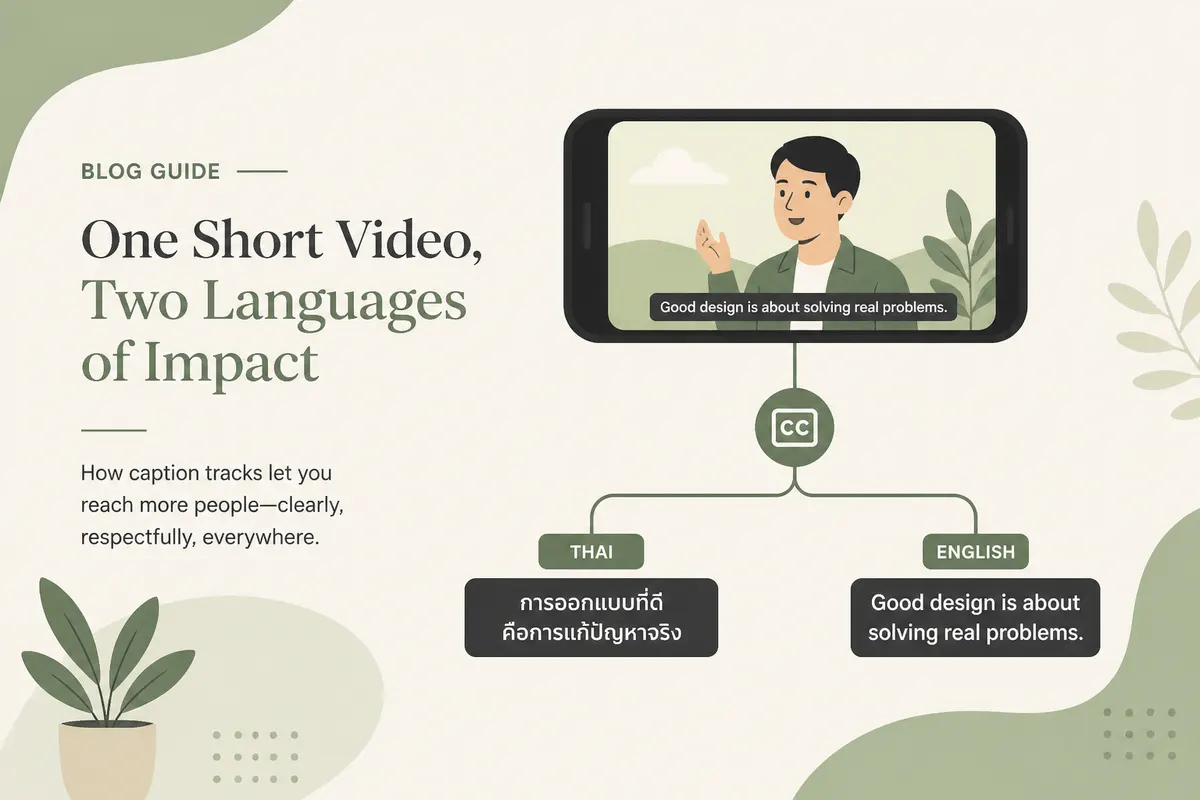
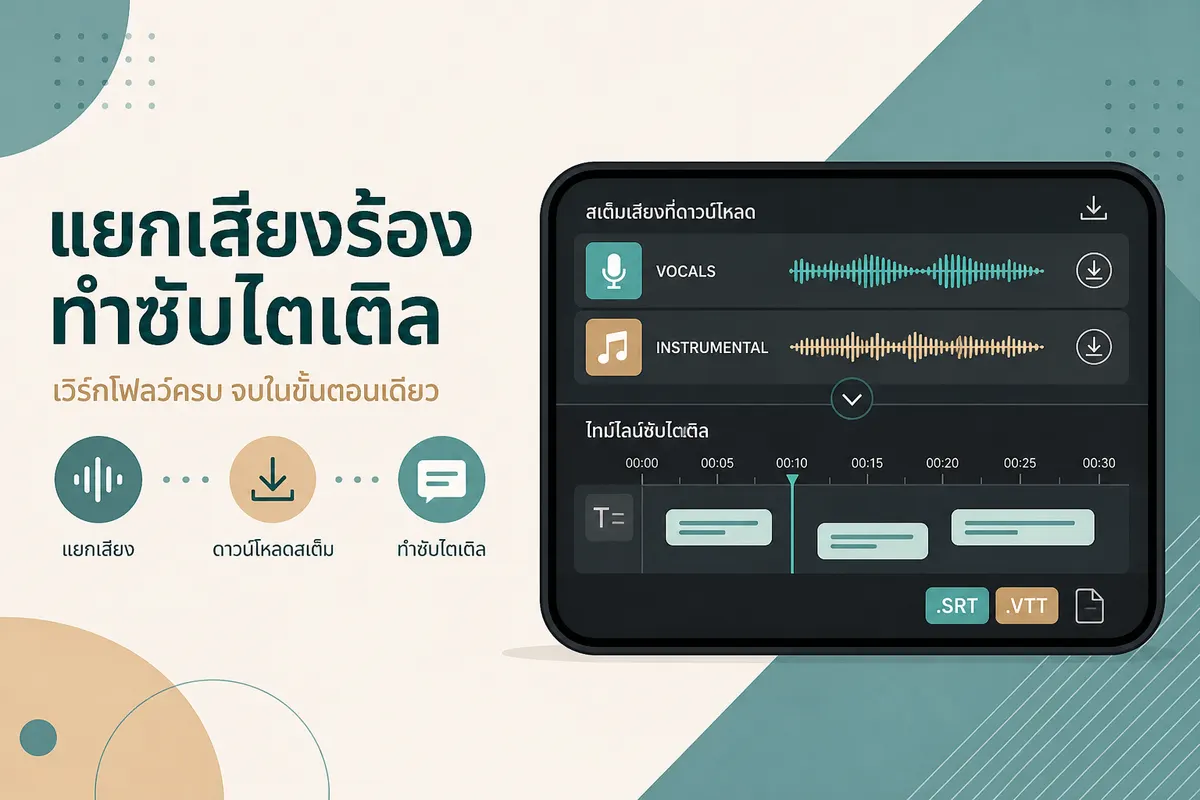
- Subtitles and captions — Generate captions for videos and live streams
- Video content repurposing — Extract text from video for blog posts or articles
- Academic and legal documentation — Transcribe lectures, depositions, and hearings
- Content creation — Convert voice notes into written content
- Accessibility — Provide text alternatives for audio content
Key point: If your main need is to turn audio or video files into text, then speech-to-text is exactly what you're looking for. The output is always text that you can read, edit, and use in other applications.
Speech Recognition vs Speech-to-Text: Key Differences
To help clarify the distinction, here's a comprehensive comparison:
| Aspect | Speech Recognition | Speech-to-Text |
|---|---|---|
| Scope | Broad (umbrella term) | Narrow (specific application) |
| Primary Goal | Understand intent & respond | Convert speech into text |
| Output | Actions, commands, responses, or text | Text only |
| Accuracy Focus | Intent-level understanding | Word-level accuracy |
| Typical Use | Voice control, commands, assistants | Transcription, documentation |
| User Interaction | Often no text displayed | Always produces text output |
| Processing | Intent recognition + action execution | Audio-to-text conversion |
| Examples | "Hey Siri, call mom" | Transcribing a podcast episode |
Visual Relationship
In short:
Speech-to-text is a subset of speech recognition. All speech-to-text systems use speech recognition technology, but not all speech recognition systems produce text output.
Think of it this way:
- Speech recognition = The entire field of understanding human speech
- Speech-to-text = One specific application within that field focused on transcription
Which One Do You Need?
Choosing the right technology depends entirely on your goal. Ask yourself one simple question:
👉 Do I want the system to do something or to write something?
Choose Speech Recognition If:
- You want to control software or devices with your voice
- You need voice commands for automation
- You're building a voice assistant or interactive system
- You want the system to respond to commands without producing text
- You need intent recognition for customer service or support
Examples:
- "Alexa, play jazz music"
- "Hey Google, what's the weather?"
- Voice-controlled smart home devices
- Voice navigation in cars
Choose Speech-to-Text If:
- You want a written transcript of audio or video
- You need to document conversations or meetings
- You're creating subtitles or captions for videos
- You want to convert voice notes into text
- You need searchable text from audio content
- You're a content creator repurposing audio into written content
Examples:
- Transcribing a podcast episode
- Creating meeting minutes from audio recordings
- Generating video captions
- Converting interview recordings to articles
For Most Content Creators
For content creators, YouTubers, podcasters, journalists, researchers, and professionals who need to document spoken content, speech-to-text tools are the best choice. These tools are specifically designed to produce accurate, readable transcripts that you can edit, share, and use in your workflow.
How Modern Speech-to-Text Works
Modern speech-to-text systems have evolved significantly with advances in AI and machine learning. Here's how they work:
1. Audio Preprocessing
The system first processes the raw audio:
- Noise reduction — Filters out background noise
- Normalization — Adjusts volume levels
- Format conversion — Converts various audio formats to a standard format
2. Feature Extraction
The audio signal is converted into numerical features:
- Spectrograms — Visual representations of frequency over time
- Mel-frequency cepstral coefficients (MFCCs) — Compact representations of audio characteristics
- Deep learning features — Learned representations from neural networks
3. Acoustic Modeling
The system recognizes phonemes (smallest units of sound):
- Phoneme detection — Identifies individual sounds
- Word formation — Combines phonemes into words
- Pronunciation variations — Handles different accents and speaking styles
4. Language Modeling
Context and grammar are applied:
- Vocabulary matching — Matches sounds to known words
- Grammar rules — Applies language structure
- Context understanding — Uses surrounding words to improve accuracy
5. Post-Processing
Final text is formatted and refined:
- Punctuation — Adds periods, commas, and other punctuation
- Capitalization — Applies proper capitalization rules
- Timestamps — Adds time markers (optional)
- Speaker identification — Identifies different speakers (optional)
Advanced Features
Modern speech-to-text tools also support:
- Multiple languages — Transcribe in dozens of languages
- Speaker identification — Distinguish between different speakers
- Punctuation and formatting — Automatic punctuation and capitalization
- Noise handling — Work with noisy or low-quality audio
- Long audio files — Process hours of audio
- Real-time transcription — Transcribe live audio streams
- Custom vocabulary — Add industry-specific terms
Real-World Examples
Speech Recognition Example
Scenario: Using a smart speaker
- User says: "Hey Alexa, set a timer for 10 minutes"
- System recognizes the command
- System understands the intent (set timer)
- System executes the action (starts timer)
- System responds: "Timer set for 10 minutes"
- No text is displayed — only voice interaction
Speech-to-Text Example
Scenario: Transcribing a podcast
- User uploads a 30-minute podcast audio file
- System processes the audio
- System converts speech to text
- System outputs a complete transcript with:
- All spoken words
- Proper punctuation
- Paragraph breaks
- Speaker labels (if multiple speakers)
- Text is the primary output — can be edited, shared, or published
Try Speech-to-Text Online
If you're looking for a simple way to convert audio to text, you can try an online speech-to-text tool.
With SayToWords, you can:
- Upload audio or video files — Supports MP3, WAV, M4A, and more
- Automatically convert speech into text — Powered by advanced AI models
- Download or copy the transcript — Use the text anywhere you need it
- Use it for multiple purposes — Subtitles, blogs, notes, documentation
- Process long recordings — Handle files of any length
- Support multiple languages — Transcribe in various languages
👉 Try it here: Speech-to-Text Online with SayToWords
Common Questions
Q1: Can speech recognition produce text output?
Yes, some speech recognition systems can produce text, but it's not their primary purpose. Speech-to-text systems are specifically optimized for accurate transcription.
Q2: Do I need both technologies?
It depends on your use case. If you only need transcripts, speech-to-text is sufficient. If you need voice control, you need speech recognition. Some applications use both.
Q3: Which is more accurate?
For transcription purposes, speech-to-text systems are typically more accurate because they're specifically trained and optimized for word-level accuracy. Speech recognition focuses on intent understanding, which may sacrifice some word-level precision.
Q4: Can speech-to-text work in real-time?
Yes, many modern speech-to-text systems support real-time transcription for live meetings, webinars, or streaming applications. However, real-time systems may have slightly lower accuracy than batch processing.
Q5: What about voice assistants that display text?
Voice assistants like Siri or Google Assistant use both technologies:
- Speech recognition to understand commands
- Speech-to-text to display what you said (optional feature)
The primary function is still command execution, not transcription.
Final Thoughts
Although speech recognition and speech-to-text are related technologies, they serve different purposes and are optimized for different outcomes.
Key Takeaways
- Speech recognition focuses on understanding intent and responding with actions
- Speech-to-text focuses on writing down what was said with high accuracy
- Speech-to-text is a subset of speech recognition technology
- Choose based on your goal: Do you need action or documentation?
Making the Right Choice
Choosing the right technology will save you time and give you better results:
- For voice control and commands → Use speech recognition
- For transcription and documentation → Use speech-to-text
For most professionals, content creators, and businesses that need to convert audio into usable text, speech-to-text tools provide the accuracy, flexibility, and features needed for effective transcription workflows.
Ready to convert your audio to text? Try SayToWords' speech-to-text tool and experience fast, accurate transcription powered by advanced AI.